


How to Apply Exterior Ceramic Cladding: Step-by-Step Professional
In modern architecture, a building’s exterior envelope is one of the most important elements, protecting both its aesthetic identity and structural performance. Among the most preferred methods, exterior ceramic cladding provides lasting protection for your building when applied with the right techniques. But how exactly does this process work? The answer to “How is exterior ceramic cladding applied?” lies not only in on-site installation but also in the precise preparation process carried out in the factory.
Here is a professional guide for exterior ceramic cladding, from project planning to turnkey delivery:
Step 1: Project Planning and Preparation of Technical Details (DWG)
Every successful application starts with flawless planning. In the first stage, a survey of the building is taken, and the layout plan for the ceramics (application) is prepared. At this stage, the dimensions of the ceramics, joint spacing, and corner turns are calculated millimetrically based on DWG details. Proper project planning minimizes material waste while ensuring visual integrity.
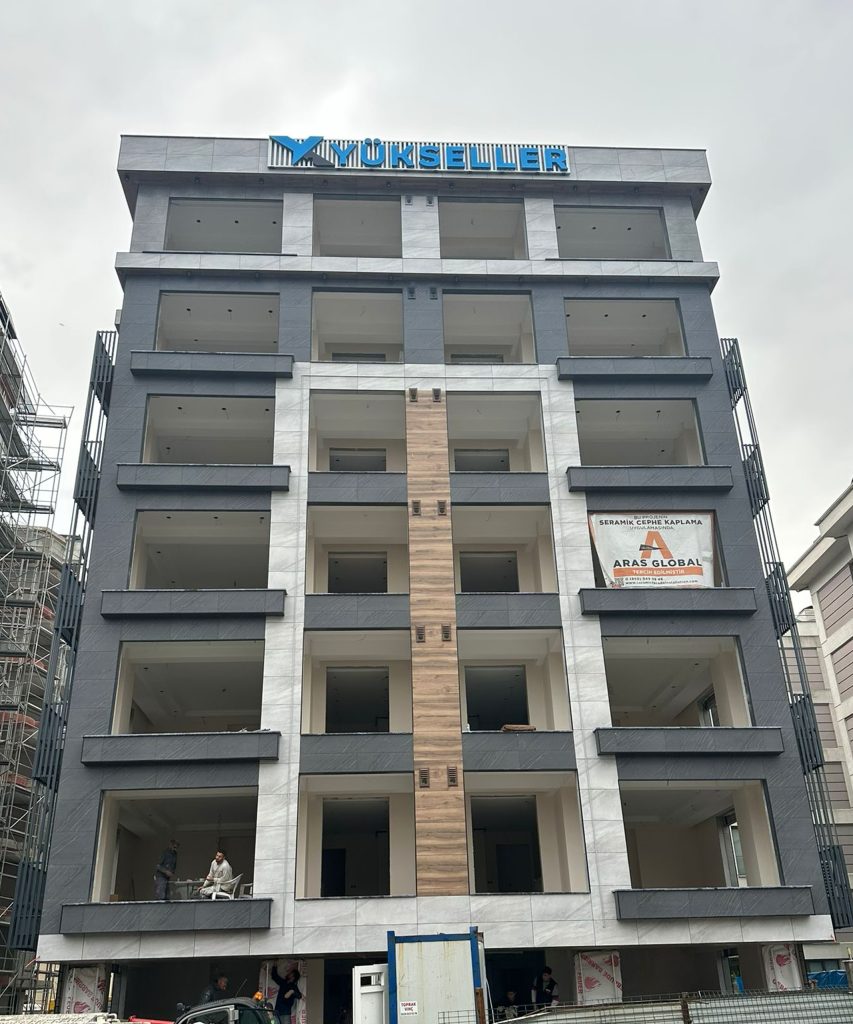
How Is Exterior Ceramic Cladding Applied?
Step 2: Pre-Preparation in the Factory Environment (The Most Critical Process)
Applying ceramics on an exterior façade is not just about attaching the panels to the wall. For safety and durability, the ceramics must undergo a series of technological processes before arriving at the construction site. At ARAS GLOBAL, these are the processes we implement at our Şekerpınar facility:
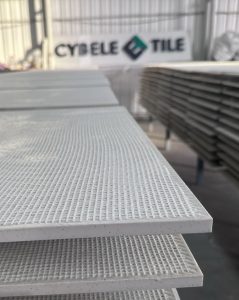
- Safety Mesh Application: Special alkali-resistant, high-strength meshes are attached to the back of the ceramic panels. This is a critical safety step, especially in high-rise buildings, preventing the ceramics from breaking and falling in case of impact.
- Curing Oven: After the meshing process, the ceramic panels enter special curing ovens. This allows the adhesive and mesh to fully integrate at the molecular level with the ceramic surface, making it highly resistant to moisture and temperature variations.
- Precise CNC Cutting: Dimensions tailored to the project are accurately cut using computer-controlled CNC machines.
- 45-Degree (Mitered) Cutting: The edges of the ceramic panels are cut at a 45-degree angle for building corner transitions and window reveals, making them ready for installation.
Step 3: Surface Preparation and Thermal Insulation
Before installation begins, any irregularities in the building surface are identified. High-density mineral wool boards are then fixed to the façade using anchors. At this stage, using A1-class mineral wool for fire safety is critical. On top of the thermal insulation, a moisture-balancing (vapor-balancing) membrane is applied, which allows the building to “breathe” while preventing water penetration.
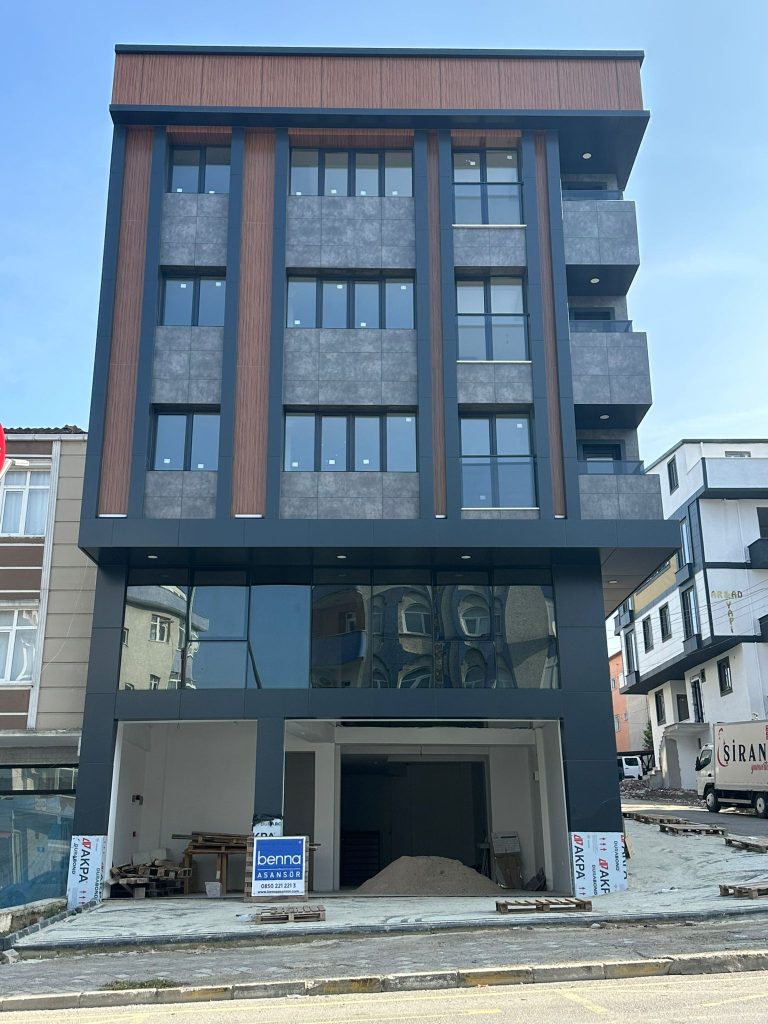
How Is Exterior Ceramic Cladding Applied?
Step 4: Installation of the Aluminum Sub-Structural Frame
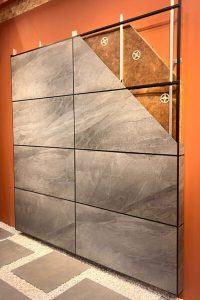
Ceramic panels are not glued directly to the wall; they are supported using a system called “mechanical installation.”
- Fixing the L Brackets: Stainless steel L brackets are secured to the building’s reinforced concrete supports (beams/columns).
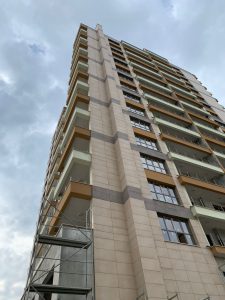
- Installation of Vertical Profiles: T- or L-shaped aluminum vertical profiles are mounted onto the L brackets, leveled carefully. The air gap created at this stage allows natural ventilation of the building (Ventilated Façade).
Step 5: Ceramic Installation Methods
Depending on the chosen architectural detail, the ceramic panels can be mounted onto the frame using three different methods:
A. Hidden Channel System
This method involves inserting aluminum clips into channels cut into the top and bottom edges of the ceramic panels. From the outside, no fastening elements are visible, resulting in a completely smooth surface.
B. Clip System (Visible Clips)
This method uses stainless steel or aluminum clips that hold the ceramic panels at the corners. The clips are usually painted to match the color of the ceramics for visual harmony. It is an economical and fast solution.
C. Adhesive System (Sika/Panel-Tack)
This method involves fixing the ceramic panels to aluminum profiles using special structural adhesives and tapes. It provides a clean and aesthetically pleasing appearance.
Step 6: Corner Details and Window Reveal Applications
The quality of an installation is determined by the corners. Factory-prepared ceramic panels with 45-degree mitered edges join at the corners to create a solid stone appearance. CNC-cut pieces used at window edges and reveal details are supported with special seals to ensure water tightness.

How Is Exterior Ceramic Cladding Applied?
Step 7: Safety and Standards Inspection
Once the installation is complete, the system’s fire safety and alkali resistance performance are checked according to TS EN 13501-1 standards. All materials used (from mesh to adhesive) must be resistant to chemical corrosion, ensuring the façade remains maintenance-free for over 20 years.
Important Note: Exterior ceramic cladding is not just an installation task; it is an engineering process. Ceramic panels cut manually or applied without mesh on-site carry risks over time, such as falling or color fading.
Conclusion
The shortest answer to the question “How is exterior ceramic cladding applied?” is: proper engineering, technological preparation, and skilled workmanship. At our Şekerpınar facility, we reinforce your ceramic panels, process them according to your project on our CNC machines, and deliver them flawlessly on-site.
If you want to combine safety and aesthetics on your building’s exterior façade, you can benefit from the expertise of ARAS GLOBAL. Contact us for free technical consultation and site inspection.


Add comment